As business students, interview preparation is essential to every aspect of our daily lives. Whether we are currently preparing for an interview or not, we are consistently gaining experience and learning new strategies that will help us succeed in our future job search. We will highlight the significance of preparing for an interview in the points that follow.
Do Extensive Research on the Company:
Congratulations, a company is interested in you! Once a company has reached out to you for an interview, it is important to be prepared before you go in to meet with them (Harroch, 2017). One of the most important steps in preparing for your interview is to research the company. It is essential to know the business and position that you are interviewing for. You should review the company’s website to learn how they operate, research their competitors, view the company’s LinkedIn, and more to find as much as you can on the company (Muse, 2014). Research you do beforehand will make your interview more meaningful. During your research, you should search the company on glassdoor.com. Glassdoor has many helpful company reviews from customers and employees that give you more information that can be useful in your interview. You only use this for a background on the company and for a basic understanding of the employer (Muse, 2014). This point is important because some unhappy employees can exaggerate about their experiences.
Research the People Who Will Interview You:
When you are researching the company, you should research the individuals that will be interviewing you (Harroch, 2017). This will make it easier to connect with them if you know things about them. This tactic could be beneficial; however, I think that it is a little too invasive to search for their social media profiles. A quick search on LinkedIn would be appropriate. Finding their professional experience will help you understand their background and their professional interests to create rapport (Muse, 2014). See more on this topic here: https://www.forbes.com/sites/dailymuse/2014/05/22/the-ultimate-guide-to-researching-a-company-pre-interview/#7ee395515ee6
Anticipate Questions You Might Be Asked:
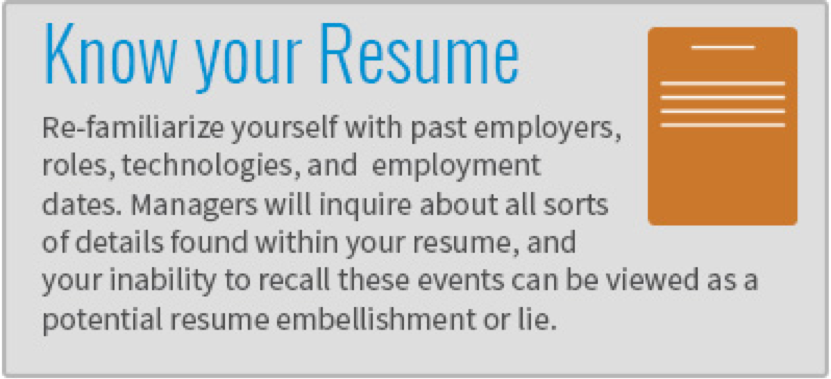
When you are preparing for an interview, it is important to think about questions that they may ask you during your interview (Harroch, 2017). Plan ahead and ask yourself common interview questions such as; what your strengths and weaknesses are, your work style, what would make you a good fit for the company, etc. You should comprise a list of questions that you may be asked during the interview. It will be very beneficial for you to be able to think through these common questions and have answers that you feel will help the interviewer see why you would be a good fit for their specific company (Muse, 2014). Anticipating questions that they may have about your resume and experience will also be important to think about. It is essential that you do not fabricate anything on your resume as they may ask you details or potentially ask for verification for extraordinary accomplishments (Muse, 2014). Lastly, look through the job requirements and description and be able to explain how your experience matches what they are looking for. All of these steps will lead you to be more prepared for your interview.

https://insights.dice.com/2014/07/28/one-way-prepare-behavioral-interview-questions/
Conduct a Mock Interview
Once you have comprised a list of questions that you may be asked, you should focus on conducting a mock interview (Harroch, 2017). This is arguably the most important step in the interview preparation process because it gives you the opportunity to get feedback on your performance. This does not have to be a formal interview with a professional. In fact, it may be more beneficial to conduct this mock interview with a friend or family member because they would be more inclined to give you constructive feedback. Additionally, you should have the mock interviewer ask you some questions that are not from the list that you comprised. Instead, they should ask you questions that will force you to think on your feet (Harroch, 2017). Conducting a mock interview will give you insight on how you will do in the real interview, as well as allow you to successfully practice ahead of time. See more on this topic here: https://www.forbes.com/sites/allbusiness/2017/03/31/10-essential-steps-to-prepare-yourself-for-a-job-interview/#2f7f3e57c72f

Use the Company’s Products or Services
This step in the interview process is not applicable to all types of jobs. More specifically, job positions in corporate offices may not offer their product or service as easily as a retail job would. Thus, this step is not as essential to the interview process as others. If applicable, you should take this a step further by reaching out to consumers and asking them for feedback (Harroch, 2017). Again, this is not always possible especially when you are not affiliated with the organization. Instead, we suggest digging deeper by locating consumer reviews on the company and its products and/or services. This will allow you to gain an understanding of how the consumer market views their products or services. This could potentially alter your decision to want to work for the company if you do not support what they are selling. Being able to land a job interview is a great accomplishment; although, you should not work for a company just because they offer you the job. You should be able to support the organization’s mission and vision.
Review Your Facebook and Other Social Media Postings
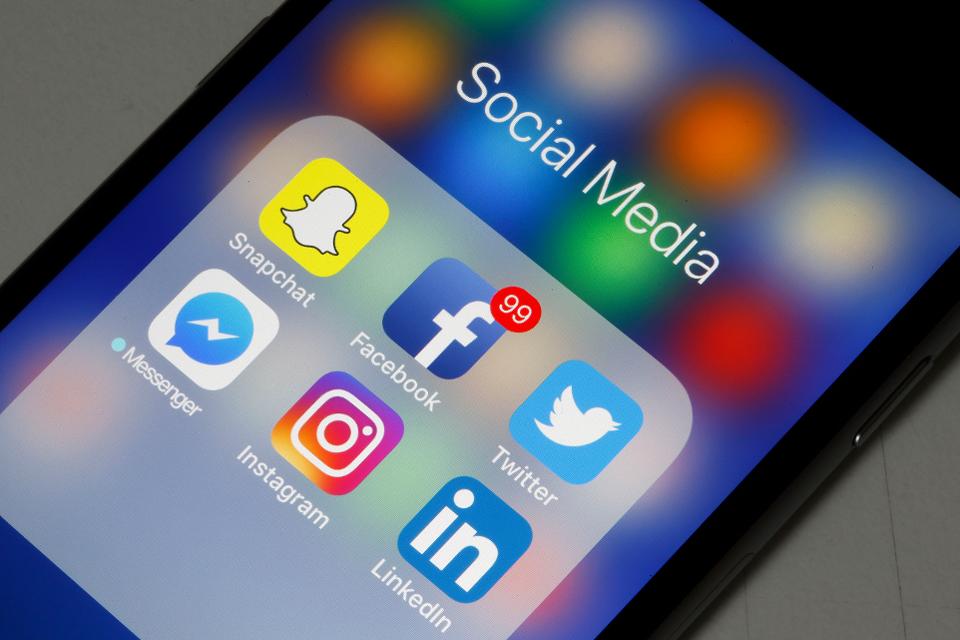
In today’s society, it is easier than ever to find someone’s social media pages. Most college students post inappropriate photos or tweets that could potentially harm their reputation. Employer’s do search prospective candidates prior to meeting them. Even though it is illegal to discriminate against a candidate for the way they look, there are no laws protecting candidates about inappropriate Facebook pictures. That being said, it is ideal to check your social media profiles to ensure that there are not any posts that could influence the hiring decision. To take extra precaution, you could even Google your name to see what employers will see when they search for you (Harroch, 2017). If you do not feel comfortable having an employer see your posts, it is most likely inappropriate. This guideline should be a rule of thumb when posting on social media at all times as you are always a potential candidate on the job market.
Dress Appropriately for the Interview:
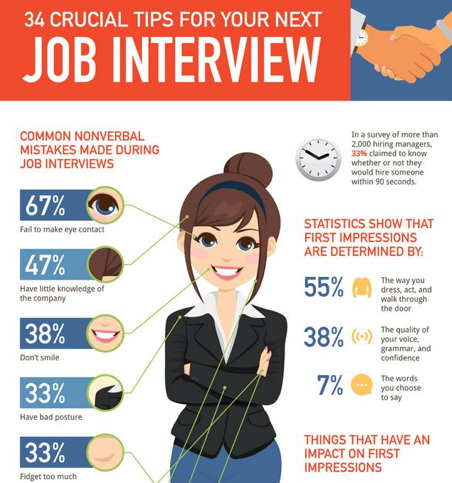
Dressing appropriately for an interview is essential to your success. A few factors to keep in mind is that first impressions are lasting (Harroch, 2017). A candidate dressed in a suit and tie will make a much better impression than a person wearing jeans and a blouse. In some extreme cases, if you are not dressed appropriately you might not get the job. Non-verbal communication speaks louder than what you verbally say. If you are not dressed professionally, are slouching during the interview, or do not make eye contact, then this tells the interviewer that you are not interested in the position (Smith, 2016). Even if you answer their questions attentively and accurately, they will most likely not be interested due to your lack of non-verbal communication skills (Smith, 2016). When planning what to wear for an interview, also practice your posture and facial expressions as they are just as important as the outfit you wear. See more on this topic here: https://www.forbes.com/sites/jacquelynsmith/2013/06/20/how-to-dress-for-your-next-job-interview/#49544c595ec8
Arrive Early and Prepared for the Interview:
It is extremely important to prepare a few days before a big interview. All of the topics of preparation we have discussed and will continue to discuss are essential to your overall success in the interview. Employers are knowledgeable and know when you did not take the time to research their organization. Additionally, you should research where the interview is located and even do a practice drive to determine how long it will take you to arrive (Harroch, 2017). You want to give yourself enough time due to unforeseen events that may arise the day of the interview (Harroch, 2017). Punctuality is a huge part of your first impression. Employers will not think very highly of you if you are late to the interview as it may signal an attendance issue as a future employee. Moreover, it is also a great idea to turn your cell phone off to avoid interruptions as this may be rude to receive another call during the interview (Harroch, 2017).
Bring the Necessary Documents:
The most tangible aspect of the preparation process is remembering to bring the necessary documents for the interviewees (Harroch, 2017). These documents include your resume, a list of references, copies of signed reference letters, and work samples of your previous assignments (Harroch, 2017). The most essential document to bring is your resume as it lists the entirety of your skills, experiences, and educational background. I disagree with the source in terms of bringing copies of signed reference letters as it may be premature to bring reference letters before it is requested. On the contrary, you should have a list of references prepared in case they ask for their contact information. Additionally, the work sample documents is contingent on what field and industry you are applying within. If you are interviewing for an architect or graphic design job, then work samples are imperative to your success. Although, if you are applying for a human resources position, you most likely do not have documents to display your experience in the industry. Overall, the most important aspect of your necessary documents is being prepared with multiple copies of your resume as that is always a requirement for any job interview (Harroch, 2017).
Overall, these nine practices are all practical and effective ways of preparing for an interview. Companies are looking for the best candidate for their company, and if you can prove that you have done your research and you are prepared then it will show them that you are that much more reliable and organized. The most important things to remember is that you should not get discouraged if you do not get a job. Job hunting is a tough process, and you will not always get the job offer. It is important to take the negative feedback well. You should critically analyze your interview by asking yourself how it went and what you can do to improve in future interviews. Every interview, regardless of the outcome, is an opportunity to gain experience which will ultimately lead to more success in the future.
 A College Student's Guide to Interview Prep